
In-Mold Decoration (IML/IMD) Manufacturer
In-Mold Decoration (IML/IMD) Capabilities
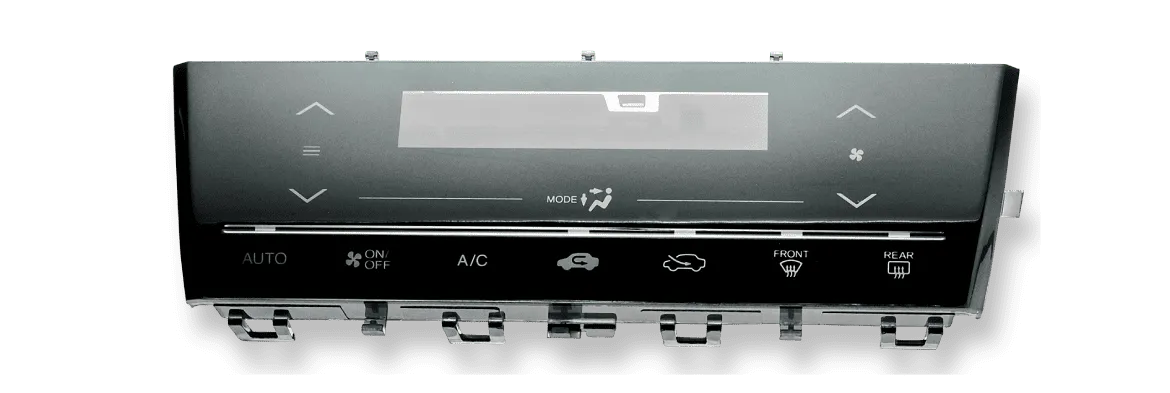
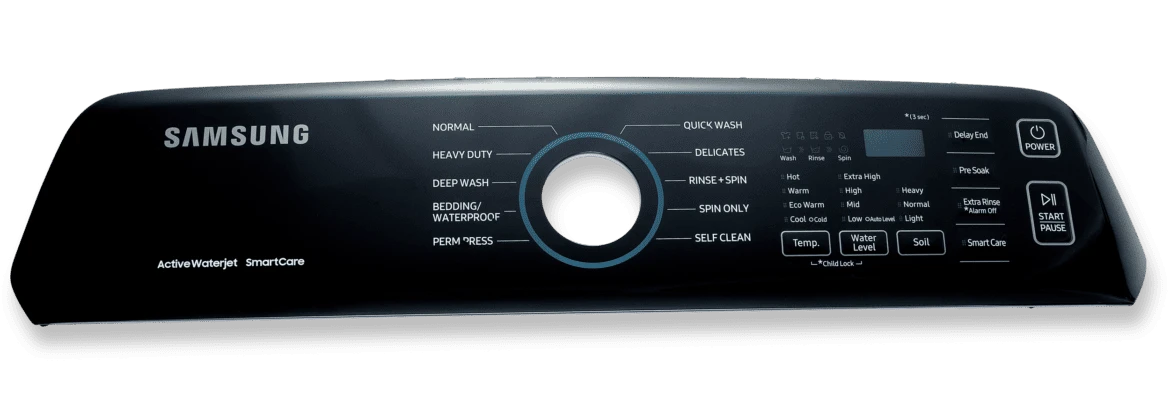
King Epoxy Emblem, an experienced injection molding manufacturer, offers in-mold labeling (IML) that seamlessly integrates graphics with injection molded plastic nameplates and control panels for a flawless finish. Our heat or vacuum forming techniques ensure curved shapes wrap around edges, creating visually appealing products without gaps. By combining decorative overlays with the molding process, we enhance graphic durability, reduce manufacturing costs, and offer design flexibility. Graphic overlays serve as the face of a product, providing concise brand identification on controls and capacitive surfaces.
King Epoxy Technology excels in producing high-quality molded plastic control panels with overlays that meet design requirements and aesthetic standards. Our expertise has established us as leaders in button controls, control panels, and membrane switches. Functionality is paramount in control panel design, ensuring ease of use and manipulation. Our experienced engineers collaborate closely with customers to achieve functional excellence and appealing aesthetics. While functionality is crucial, an attractive appearance enhances usability and sparks customer interest.
How We Create In-Mold Decorated Parts
Talk to Our In-Mold Decoration Manufacturing Team
For graphics that won’t peel, fade, or shift, in-mold decoration bonds your design directly into the molded part.
Frequently Asked Questions
Q1: What is the difference between IML and IMD?
A: In-mold labeling (IML) applies a pre-printed film to a flat or gently curved surface during molding, while in-mold decoration (IMD) more broadly covers integrating decorative or functional graphics, including textured or backlit designs, directly into the molding process.
Q2: Can in-mold decoration be used for injection molded plastic nameplates?
A: Yes. In-mold decoration is commonly used to produce injection molded plastic nameplates with graphics bonded beneath a protective surface layer for long-term durability.
Q3: Does in-mold decoration cost more than a standard graphic overlay?
A: In-mold decoration typically involves higher upfront tooling investment than a printed graphic overlay, but it can reduce long-term costs through improved durability and fewer rejected parts at scale.
Q4: What durability benefits does in-mold decoration offer over printed overlays?
A: Because the graphic is bonded beneath the part’s surface during molding rather than applied on top, in-mold decoration resists peeling, fading, and shifting better than a standard printed overlay.
Q5: What industries use in-mold decorated control panels?
A: In-mold decorated control panels are common in home appliances, automotive interiors, and consumer electronics, where a durable, seamless graphic finish is required.